In brief
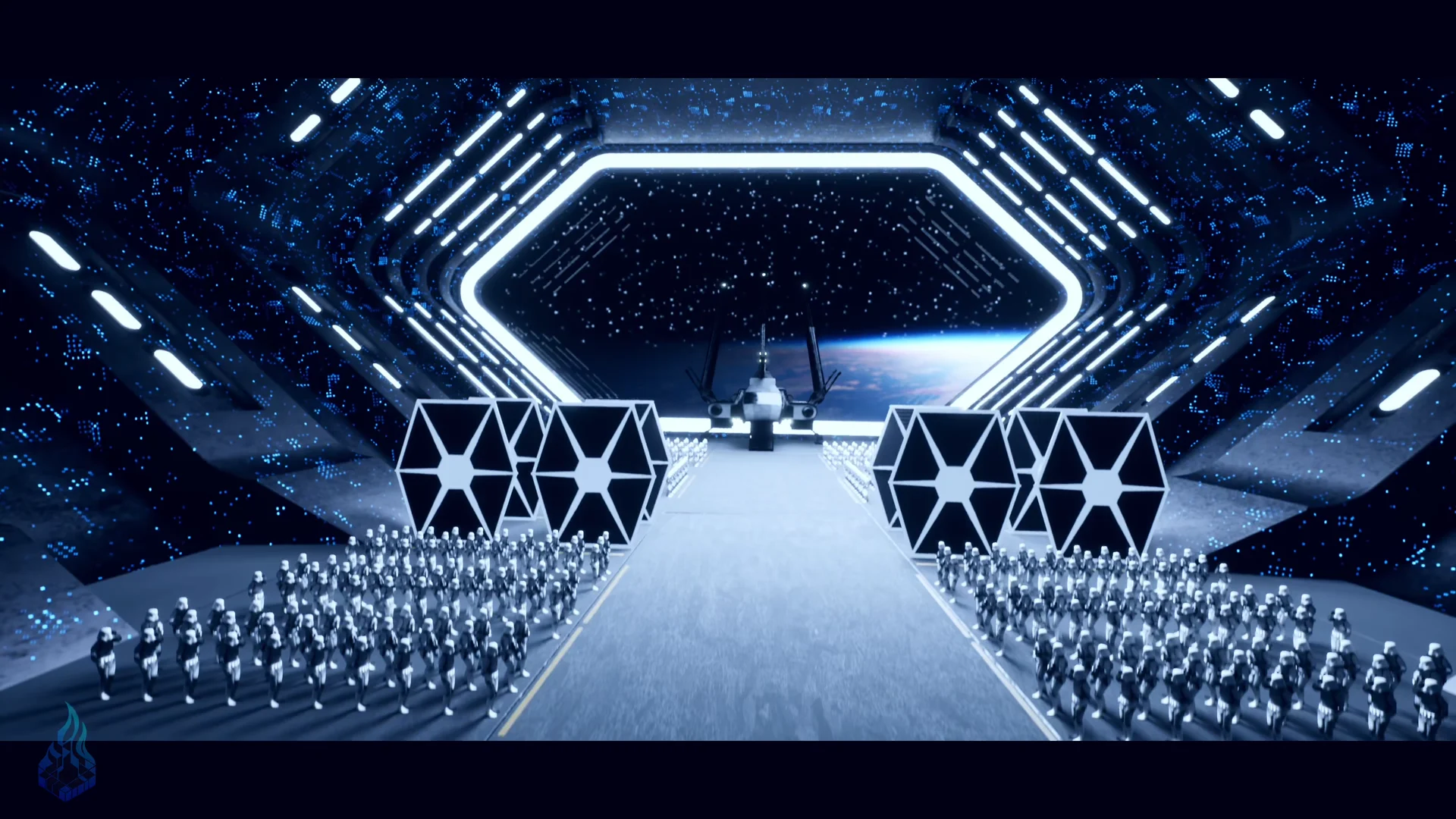
This original studio concept uses a cinematic hangar to explore an imagined spacecraft. Repeated structures establish scale, a central composition guides the eye and controlled lighting separates the subject from its surroundings. It is a creative visualisation study, not a commissioned vehicle project.
An imagined scene with a clear focal point
This spaceship concept is a Fireball Studios visualisation study: an opportunity to explore an imagined hangar through composition, atmosphere and a cinematic camera view. The setting creates a world around the spacecraft, with a central aisle leading towards the open bay and the distant planetary horizon.
A scene like this can contain a great deal of detail, but it still needs a clear visual hierarchy. The viewer should be able to recognise the main subject before exploring the surroundings. A strong central composition gives the eye somewhere to begin and a direction to follow.
Give the world a sense of scale
Scale is communicated through relationships. Smaller figures, repeated structures and the height of the hangar opening help the viewer read the size of the space. Repetition also creates depth: forms become smaller as they recede, drawing attention through the foreground towards the spacecraft beyond.
When developing an imagined environment, it helps to establish those relationships before adding surface detail. Review a simple view of the scene and ask whether the focal point remains clear. If the space feels confusing without its textures, further decoration is unlikely to resolve the composition.
- Choose a primary subject and a viewpoint that gives it room.
- Use repeated forms and familiar proportions to communicate scale.
- Leave quieter areas around the most important visual details.
Use light to organise the scene
The cool palette and bright outlines of the hangar opening give this study its atmosphere. Light also performs a practical visual role: it separates silhouettes, reveals surfaces and draws attention towards the bay. Darker areas provide contrast and prevent every part of the image from competing equally.
For a concept visualisation, lighting references are most useful when their purpose is explained. Consider whether a reference contributes colour, contrast, depth or a particular mood. Combining those observations gives the scene a consistent direction without requiring every surface to receive the same treatment.
Let the film reveal the space
A moving camera adds another layer to an environment study. The opening view establishes the setting, while changes in viewpoint reveal relationships between objects. Watch the accompanying film as a creative exploration of that space. The same attention to framing, light and sequence can help make many kinds of imagined scenes easier to understand and more compelling to explore.
Explore the concept film
Have an idea of your own? Talk to the studio